
A glimpse of who I am
In brief
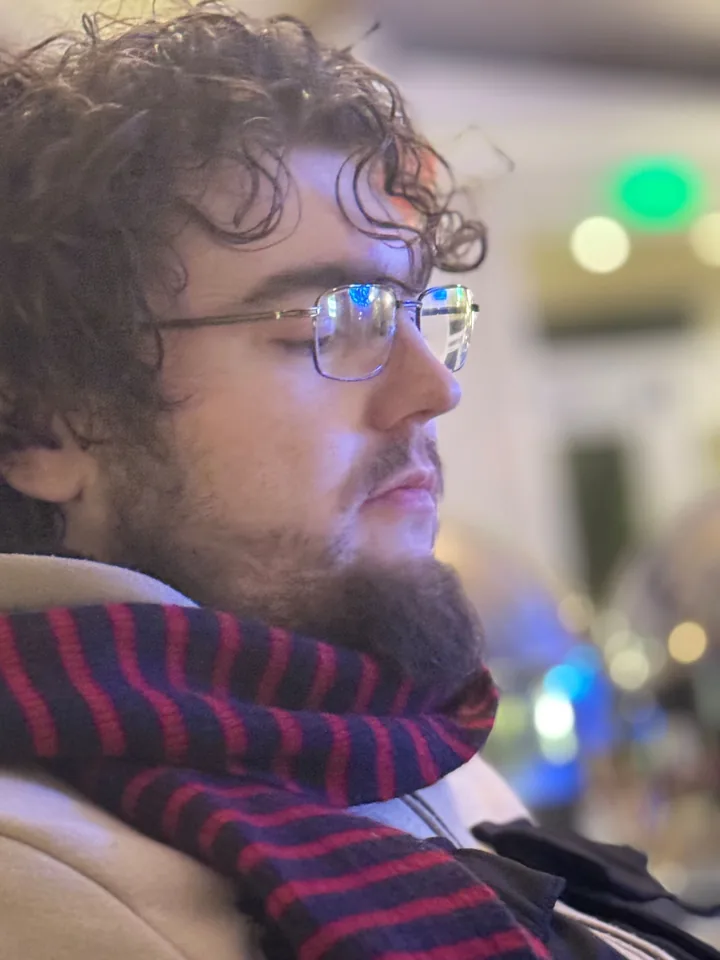
Michael Byrne is an AI systems builder and independent researcher on Cape Cod, Massachusetts. He builds AI systems and tools, among them Espalier-Harness, a multi agent orchestration harness with mechanical enforcement of rules through hooks, versatile agentic tooling, cross session memory and continuity systems, multi agent fanout review systems with automated red team steps, a self curating ledger, and many other useful systems. His research asks how models learn, remember and can be read from the inside, published as open records such as specdec-sidechannels. A professional musician and Berklee College of Music graduate, he spent 13 years teaching and playing music before moving into AI.
Me in 5 seconds? Born in West Virginia. Went to music school in Boston. I stayed in MA and worked in music and eventually made my way to Cape Cod. I have always followed science and technology with great interest. When I realized what AI is becoming, it lit a fire of curiosity and a mission to understand these systems at the deepest level. I can recall the first time AI really truly impressed me, and the time from that moment, to the incredible capabilities it has now, passed in the blink of an eye. If it’s possible that AI is the future, I want to be a voice in the conversation that reminds us of the amazing things AI can do if used correctly and ethically. I also want to plan for and mitigate issues caused by rapid advancement of this technology.
What I build
My work sits between software engineering and applied AI research. I build harnesses that make agent behavior easier to govern, evaluation systems that expose failure modes, and small experiments that turn observations about model behavior into testable questions. I also develop software and apps using AI. I built this website using a system I crafted. If I need to use it, I learn to build it, or at least learn how it works.
How I think
I learn by building, testing, and revising. Evidence is everything. What’s a mind if you can’t change it, and what’s a fact without evidence?
To me, repeatable evidence is the most important thing there is. There is a duty to the truth, to “what is real” that has drifted from the reality that media and digital worlds portray. I have pushed heavily for things that I now argue against, and vice versa. Evidence is always what changed my mind.
You can argue about an opinion. You can argue about an idea. You can argue about a plan, a feeling, an action. You can’t argue about facts. Fictional material aside, something either is or it isn’t.
As I work, I try to imagine and grasp, if you will, the big picture first. I try to sense and conceive how it works at the most basic level. I will think of something as a system, then work backwards to build it. I have learned to build kill tests into my ideas, and doing so has helped me test and prototype many projects and ideas in a short time. I spent a lot of effort on harness engineering early because it allows me to run many projects in parallel, and I can offload short term attention and memory to the repos and the AI, with a refresher a quick prompt or an opened log away.
A parallel practice
Alongside the technical work, I am a professional musician and a Berklee College of Music graduate. Years of performance, teaching, and production continue to shape how I think about coordination, improvisation, feedback, and systems that must work under real conditions.